

How Does Plumbing Work: Plumbing Basics
Home plumbing is pretty straightforward. A casual gaze at the interwoven mesh of pipes and valves may seem overwhelming but bear with me. Understanding a few plumbing basics will see you navigate the mesh like a pro.
House plumbing consists of two systems:
- Water supply system
- Drain-water vent system (DWV)
House Plumbing Basics: Water Supply System

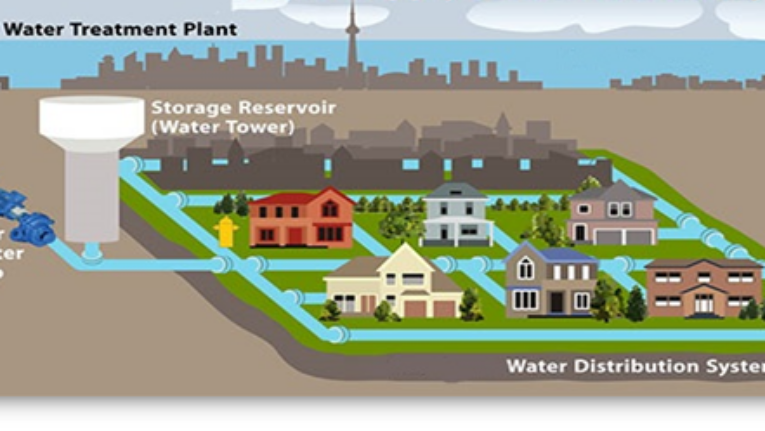
Water supply is a system of pipes that brings fresh water into the home. The system is highly-dependent of pressure. Water in these pipes come from one of two sources:
- City water
- Wells
City water enters your house from a humongous pipe ‘the main pipe’ that’s usually parallel to your street. If your connection to the main has a problem, call a professional. Damage to the main can result in civil lawsuits and hefty fines.
People who don’t have access to city water usually get their fresh water supply from wells. Water must then be pumped into the home at high pressures. Reduced pressure keeps water from reaching the furthest and highest parts of your house.
Running showers and faucets are usually the first victims of low pressure. Factors affecting pressure range from leaks to blockages. If the leak is caused by a loose connection, it’s easily handled in-house.
If, on the other hand, the leak necessitates re-piping, you best call for a professional plumber. You can read more plumbing problems you should leave to a plumber, here.
The main pipe is connected to your water meter. There’s a shutoff valve before or after your meter. The valve cuts off the water supply system making it useful when doing repairs.
Let’s look at the common problems facing the water supply system.
Basic Plumbing Tips: Maintaining the Water Supply System
Correctly installed piping is leak-proof. The system, however, disintegrates with time. In some cases, a plumber may find it necessary to do a complete overhaul of the plumbing.
The water supply system performs optimally when pressure is high. This makes the system rather sensitive to damage.
To illustrate, a leak in the drainage system will only cause damp-related problems. By contrast, leaks in the water supply system take things a step further: They affect water pressure. Low pressure makes it impossible to run showers and flush toilets.
Evidently, leaks are most harmful in the water supply system. Due to the sensitivity of the system, its problems are best handled by professionals.
Let’s move on to the next system:
Plumbing Basics: Drain Water Vent (DWV) System

The two home plumbing systems don’t overlap and for good reason. However, there are bridges all over the home where the two systems meet. Plumbers call these bridges fixtures.
You, on the other hand, know them by their household names: Sinks, faucets, washing machines, and the like.
A fixture is, therefore, defined as any point of water use. Clean water enters a fixture, wastewater leaves. The drainage system relies heavily on gravity to rid the home of wastewater.
The DWV has three main components:
- Drain pipes
- Drain traps
- Drain vents
Plumbing Basics: Components of the Drain Water Vent SystemDrain Pipes
These are downward angled pipes that rely on gravity to move water from the fixture and into the sewer line. By observation, you’ll tell this system is more complex than the water supply system: Reliance on gravity has its downsides.
Drain pipes have to be engineered and placed in a manner that lets them play gravity to their advantage. To illustrate, consider the angle of the pipes. These pipes are also bigger than water supply system pipes.
Their size allows them to carry waste without blocking.
Drain Traps
Drain traps, also called P traps, are U-shaped pipes that prevent backflow in a plumbing system. These pipes also hold water consistently, thanks to their curvature.
Why should a drain pipe hold water?
The DWV system connects your house to the sewer line. Without the drain trap, sewer gases would turn your house into a stink-fest. Drain traps also allow grease, hair, and other debris to sediment.
This debris is then removed through clean out plugs. Without the traps, the debris would move down the pipe and cause clogging.
Drain Vent
If you turn a bottle of water upside down, water flow is rather hectic. That’s what happens when water flows through a closed system; it’s just not smooth. That’s where drain vents come in.
The drain vent system runs from your roof and into your drain pipe. It releases air into the plumbing to ensure smooth drainage.
Damage to any of these three systems will be reflected in the overall efficiency of the DWV system. Sub-standard products also affect your drainage’s efficacy. Only buy certified quality plumbing products.
What People Say
The way to get started is to quit talking and begin doing.
Walt Disney
Don’t cry because it’s over, smile because it happened.
Dr. Seuss
 M PLUMBING SERVIC